


Ah, the spring time change. While the promise of longer, sun-drenched evenings is obviously appealing, the reality of "springing forward" often brings a collective groan. We all hate losing an hour of sleep, period.
If you or your child struggles with ADHD and/or gaps in Executive Functioning, however, this weekend’s time change is more than just a minor nuisance—it can feel like a complete system override.
At Eardley Education Solutions, we hear it from our clients every year: the Monday after the start of Daylight Saving Time is one of the hardest days of the year, full stop. If you are already dreading the upcoming disruption, we want to validate those feelings. You are not imagining things, and you are not overreacting. This time change is uniquely positioned to drain your cognitive battery. Here’s why it happens, and more importantly, how you can protect your peace this week.
The Perfect Storm: Sleep, Routine, and the Brain
Executive Function is essentially the CEO of the brain. These are the cognitive skills that help us plan, organize, manage our time, regulate our emotions, and hold information in our working memory.
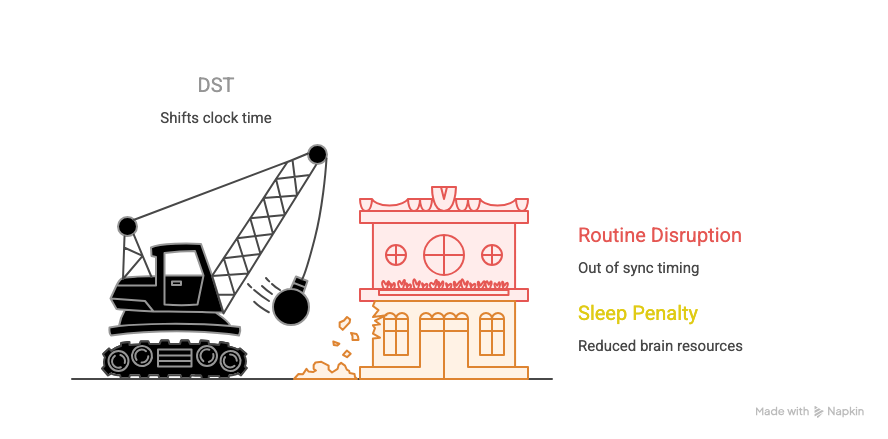
These skills rely heavily on two foundational pillars: adequate sleep and predictable routines. Daylight Saving Time aggressively impacts both.
1. The Sleep Penalty
When you are neurodivergent or struggle with Executive Function, your brain already has to work harder to execute everyday tasks. Sleep is the fuel that makes this heavy lifting possible. Losing even an hour of sleep drastically reduces your brain’s available resources. When you are tired, your working memory shrinks, your impulse control falters, and task initiation (even just getting out of bed) becomes a monumental hurdle.
2. The Routine Disruption
People with Executive Function challenges often rely on external routines to scaffold their day. When the clock says 7:00am but your body screams that it’s actually 6:00am, that internal mismatch throws off your timing for everything. The physical cues you rely on to transition between tasks are suddenly out of sync.
What to Expect This Week
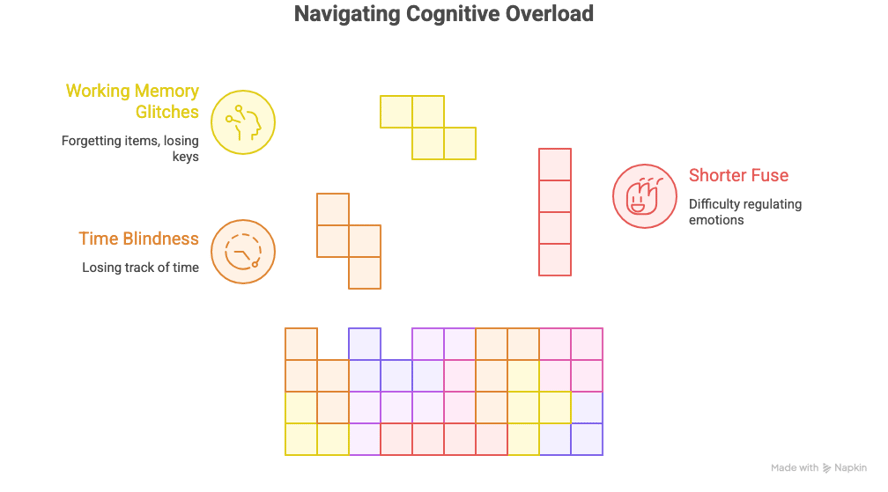
Because your cognitive load is spiking just to accommodate the new schedule, you might notice an exaggeration of typical EF struggles over the next few days. It is completely normal to experience:
-
Intense Time Blindness: Losing track of time entirely or misjudging how long tasks take
-
A Shorter Fuse: Difficulty regulating emotions, leading to quicker frustration or meltdowns over small inconveniences
-
Working Memory Glitches: Forgetting lunch boxes, losing keys, or dropping the ball on multi-step instructions
How to Protect Your Executive Function This Weekend
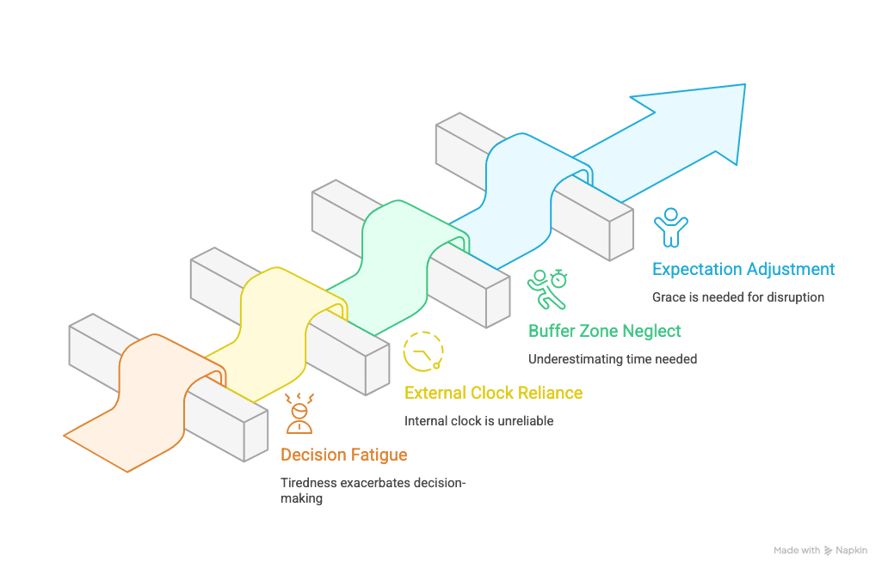
You can’t control the clocks, but you can control your environment. Here are some best practices to ease the transition and support your brain:
1. Front-Load Your Decisions
Decision fatigue hits hardest when we are tired. Don't wait until Sunday night or Monday morning to figure out the logistics of your day.
Do it today: Pick out clothes for Monday, meal-prep lunches, pack backpacks, and place them by the door. Eliminate as many Monday morning choices as possible.
2. Externalize the Clock
When your internal clock is broken, you have to rely on external ones. Time blindness will likely be worse this week, so don't rely on "feeling" how much time has passed.
Use Visual Timers: Set a visual timer for breakfast, getting dressed, and brushing teeth. Let the timer hold the responsibility of keeping you on track so your brain doesn't have to.
3. Build in Generous Buffer Zones
Everything will take longer on Monday. Acknowledging this reality is half the battle.
Add 15 Minutes: Wake up 15 minutes earlier than you think you need to (even though it hurts), and plan to leave the house 15 minutes earlier. This buffer zone prevents the panic of rushing, which severely compromises emotional regulation.
4. Radically Adjust Expectations
Give yourself and your children some grace. If the morning routine takes a little longer, or if Monday evening features a meltdown, recognize it as a biological response to sleep loss and routine disruption—not a personal failure.
Building Systems That Bounce Back
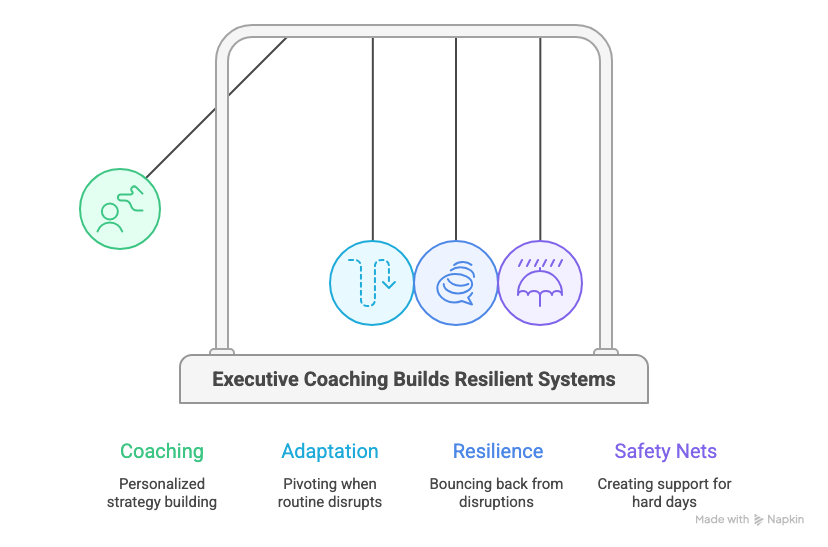
Daylight Saving Time happens every year, but the truth is, life disrupts our routines almost daily. A sick day, a changed school schedule, or an unexpected traffic jam can all create the same "system override" feeling as a time change.
This is exactly what our Executive Function Coaching addresses.
Our EF Coaching isn't about forcing you into a rigid, inflexible schedule that shatters the moment life throws a curveball. Instead, we work with you to build resilient systems—personalized strategies that help you adapt, pivot, and bounce back when your routine is inevitably disrupted. We help you understand your unique brain profile so you can create safety nets for your hardest days.
If you’re tired of feeling like your household's routines fall apart the second something changes, you don't have to navigate it alone!
Ready to stop dreading disruptions and start building resilience?
Learn more about how our Executive Function Coaching can support you and your family ALL the time!